Gravel vs. concrete driveways in coastal Alabama: which should you build?
For most rural and semi-rural lots on the Alabama Gulf Coast, a gravel driveway is the cheaper, better-draining choice, and it runs about $1 to $3 per square foot installed. A concrete driveway costs several times more, usually $8 to $15 per square foot, but lasts 30 to 40 years with little upkeep and gives you a clean, hard surface. In a climate this wet, the right pick comes down to how long the drive is, how the lot drains, and how much maintenance you want to do.
The short answer
Go with a gravel driveway for long, rural, or budget-driven drives, and anywhere you want water to soak straight through instead of running off. Go with a concrete driveway or slab for shorter approaches near the house, low maintenance, and a finished look that handles daily in-and-out without ruts. Both work on the coast. What they both depend on, far more than the surface you see, is the base underneath.
Gravel vs. concrete at a glance
| Gravel | Concrete | |
|---|---|---|
| Installed cost, per sq ft | $1–$3 | $8–$15 |
| Typical residential drive | $1,500–$5,000 | $6,000–$20,000 |
| Lifespan | Indefinite with upkeep | 30–40 years |
| Drainage | Permeable, water soaks through | Sheds water, needs slope and drains |
| Maintenance | Regrade and add stone every 1–3 years | Low: seal and repair cracks |
| Repairs | Easy, just add material | Harder, patches show |
| Best for | Long or rural drives, wet lots, budget | Short drives, low upkeep, clean look |
Cost: what each one runs on the Gulf Coast
Gravel is the least expensive driveway you can build. Installed, it runs about $1 to $3 per square foot, so a typical residential drive lands somewhere between $1,500 and $5,000 depending on length, width, and how much base it needs. The trade-off is upkeep: budget another $0.25 to $1 per square foot every one to three years to regrade and top up the stone.
Concrete costs several times more up front, generally $8 to $15 per square foot installed, which puts most residential driveways between $6,000 and $20,000. You pay more at the start and far less over time, since a properly poured drive needs little beyond the occasional sealing and crack repair. These are market ranges, not a quote, because the base prep on a wet lot can swing either number.
Drainage: the real difference in a wet climate
This is where the coast picks a side. The Alabama Gulf Coast is one of the wettest places in the country, with Mobile averaging around 67 inches of rain a year, so how a driveway handles water is not a small detail.
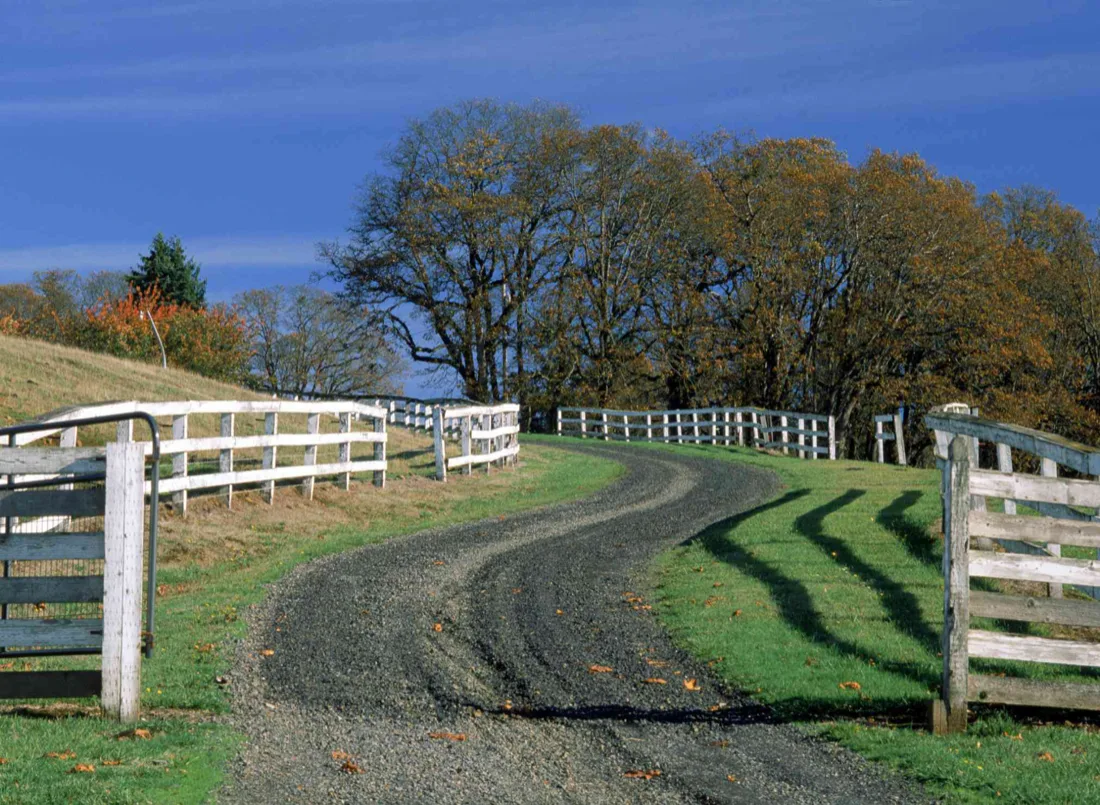
Gravel is permeable. Rain soaks straight through the stone into the ground instead of sheeting off, which is a real advantage on a big lot and keeps you clear of the stormwater runoff a large paved surface can create. The catch is that hard rain can wash and rut gravel on any real slope, so it needs a crowned shape, good edges, and a culvert where it crosses a ditch.
Concrete sheds water, so it has to be pitched to drain to the right place, never toward the house or garage. Poured flat or sloped wrong on our heavy soils, water pools and works into the joints. On sandy coastal ground concrete needs a compacted base so it does not settle, and on the clay flatwoods to the north it needs that base plus proper joints to handle soil that swells and shrinks with the rain.
Maintenance and lifespan in sand and rain
Gravel lasts as long as you keep feeding it. Traffic and hard rain scatter and sink the stone, so a gravel drive wants a regrade and a fresh layer every one to three years, more often on sandy soil that lets rock migrate. It is cheap, easy work, and a washout is a quick fix rather than a demolition.
Concrete lasts 30 to 40 years when it is poured on a solid base, and coastal weather is easy on it as long as water is not sitting against it or pushing up from below. The failures we get called to fix almost always trace back to a skipped base or bad drainage, not the concrete itself. Repairs are harder than gravel, since a patch rarely matches and a badly cracked slab often has to come out, which is where demolition and replacement comes in.
Base prep is what actually decides
Here is the part that matters more than gravel versus concrete: neither one holds up on a bad base. On the wet, sandy, high-water-table ground common across Baldwin and Mobile County, the base is the driveway. Gravel laid straight on soft dirt sinks and disappears into the mud. Concrete poured on uncompacted or poorly drained fill cracks and settles no matter how good the mix is.
A driveway that lasts starts with the same grading and dirt work a foundation gets: the organic material stripped out, clean fill compacted in lifts, the surface crowned to shed water, and a culvert where it crosses the ditch. Do that first and either surface will earn its cost. Skip it and you will be rebuilding in a couple of wet seasons. If you are prepping a new homesite, our guide to preparing a lot for building in Baldwin County covers where the driveway fits in the bigger job.
FAQ
Is a gravel or concrete driveway better for coastal Alabama? It depends on the drive. Gravel is cheaper, drains through, and suits long or rural drives and wet lots, but it needs topping up every one to three years. Concrete costs more up front, lasts 30 to 40 years with little upkeep, and fits shorter drives near the house. Both need a solid, well-drained base.
How much does a driveway cost on the Gulf Coast? Gravel runs about $1 to $3 per square foot installed, so roughly $1,500 to $5,000 for a typical residential drive. Concrete runs about $8 to $15 per square foot, or roughly $6,000 to $20,000. Base prep on a wet lot moves both numbers, so a site visit is the only way to get a real figure.
Which drains better in a wet climate? Gravel, in the sense that rain soaks straight through it into the ground instead of running off. Concrete sheds water and has to be pitched and drained correctly, or it pools. On a big lot, gravel also helps you avoid the runoff a large paved surface creates.
How long does a concrete driveway last in Alabama? About 30 to 40 years when it is poured on a compacted, well-drained base. Coastal weather is easy on concrete; a bad base and standing water are what wreck it. Most cracked and settled driveways we replace failed at the base, not the surface.
Why does base prep matter so much here? Because the coast is wet and the soil is soft. Gravel on soft ground sinks into the mud, and concrete on uncompacted fill cracks and settles. Stripping the organics, compacting clean fill, crowning the surface, and adding a culvert are what make either driveway last on Gulf Coast ground.
Get a driveway that holds up
The surface is the easy call. The base under it is what decides whether your driveway lasts two seasons or thirty years. EMCO Builders builds gravel and concrete driveways, and the site work under them, across Baldwin County, Mobile County, and South Alabama, with more than 30 years on this ground. Call (251) 747-7839 for a free estimate and we will look at your lot, your drainage, and the drive you actually need.