Forestry mulching vs. traditional land clearing: which is right for your South Alabama lot?
Forestry mulching is the better choice for opening up underbrush, cutting trails and fence lines, knocking back invasive growth, or clearing land where you want to keep the good trees, and it usually costs less. Traditional land clearing wins when you need bare, build-ready ground, full stump and root removal, or the removal of big timber a mulcher cannot grind. On the wet, sandy ground common across the Gulf Coast, the method you pick also decides how much you tear up the soil.
The short answer for Gulf Coast property
If you are managing or reclaiming land, forestry mulching is almost always the move. One machine cuts and grinds brush and small trees in a single pass and leaves a mulch layer that shields the soil, and it costs less because nothing gets hauled or burned. If you are building, traditional land clearing is what gets you there, because it strips the lot to bare dirt that can be graded and compacted for a foundation.
Plenty of South Alabama jobs use both. Mulch the underbrush across the acreage, then fully clear and grade the footprint where the house, shop, or driveway goes.
Forestry mulching vs. traditional clearing at a glance
| Forestry mulching | Traditional land clearing | |
|---|---|---|
| Typical cost, South Alabama | $1,500–$4,000 per acre | $2,500–$7,000+ per acre with haul-off and stumps |
| How it works | One machine grinds brush and small trees in a single pass | Cut, pile, then haul off or burn, often a dozer and excavator |
| Debris | Stays on site as a mulch layer | Hauled off or burned under a permit |
| Soil and erosion | Mulch holds the soil and slows runoff | Bare soil, needs erosion control on wet ground |
| Build-ready ground? | No, roots and organic matter stay | Yes, the lot can be grubbed and graded to bare dirt |
| Wet or sensitive ground | Lighter footprint, less rutting | Heavier disturbance, harder on saturated soil |
| Regrowth | Slowed by the mulch, may need a follow-up | Roots can be fully removed by grubbing |
| Best for | Brush, trails, fence lines, keeping trees | Building pads, full removal, big timber |
Cost: why mulching usually comes in lower
Forestry mulching runs about 20 to 40 percent less than traditional clearing on the same ground. The savings come from cutting steps out. One machine does the cutting and grinding in one pass, and the mulch stays put, so there is no debris to haul, no burn permit, and no separate crew to pull stumps.
Traditional clearing costs more because it stacks those steps back on. You pay for the cut, then the haul-off or the burn, then stump grinding or removal, and often grubbing to pull roots, which adds up fast on wooded coastal land. For real per-acre numbers and what moves them, see our guide to land clearing cost in South Alabama.
Why mulching fits wet coastal ground
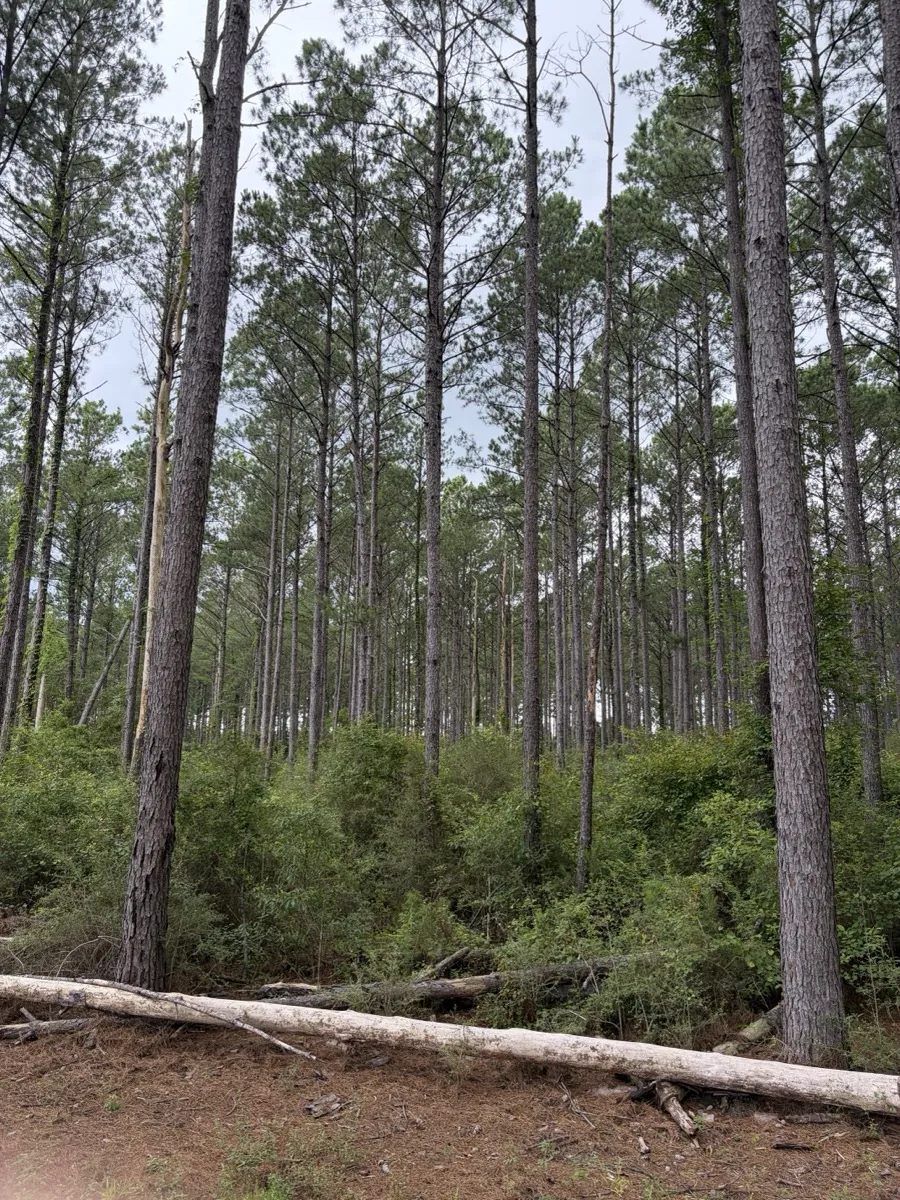
This is where South Alabama changes the math. Much of Baldwin and Mobile County is flatwoods, pine savanna, and river bottom sitting on sandy soil with a high water table, and a lot of it stays damp. Heavy dozer clearing on that ground rips up the topsoil, leaves ruts that pond water, and can turn a wet acre into a mud pit that erodes with the next thunderstorm. Mobile alone averages around 67 inches of rain a year.
Forestry mulching treats that ground gently. The machine works from the surface and leaves a blanket of mulch that holds the soil in place, slows runoff, and feeds organic matter back into sandy dirt that tends to be thin to begin with. Near creeks, wetlands, and the edges of the Mobile-Tensaw Delta, that lighter footprint is often the only sensible way to clear without setting off erosion problems or disturbing regulated ground. It also spares the roots of the live oaks and other trees you want to keep.
Mulching handles the coastal brush that grows back fastest, too: yaupon, wax myrtle, gallberry, greenbriar, Chinese privet, and popcorn tree. Grinding below the crown sets a lot of that growth back hard.
When traditional land clearing is the right call
Traditional clearing wins whenever the ground has to end up bare, level, and stable. On the coast, that usually means a build. Choose it for:
- A building pad or slab that has to be graded and compacted to hold a foundation
- Full stump and root removal, where nothing can be left to rot, settle, or resprout under concrete
- Septic fields, utilities, and drainage work that need open, precise ground
- Taking out mature pine and hardwood past what a mulcher can grind, roughly 12 to 15 inches across
- Converting raw, wooded land fully over to pasture, a homesite, or a commercial pad
Even then, many jobs pair the two: mulch the lot to open it up and see what you are working with, then bring in the dozer and excavator to grub and grade the footprint. If you are prepping to build, our step-by-step on preparing a lot for building in Baldwin County covers the full run from clearing to pad.
FAQ
What is the difference between forestry mulching and traditional land clearing? Forestry mulching grinds brush and small trees into a mulch layer in one pass and leaves it on the ground. Traditional clearing cuts the growth, then hauls it off or burns it, often with a dozer and excavator, and can strip the lot to bare soil. Mulching is lower impact and cheaper; traditional gives you build-ready ground.
Is forestry mulching cheaper than land clearing? Usually, by about 20 to 40 percent. Mulching is a single-pass job with no hauling, no burn permit, and no separate stump crew, so it skips the line items that run up a traditional bill. Traditional clearing costs more because it adds debris removal, stump work, and grading.
Which method is better for wet, sandy Gulf Coast soil? For most jobs that are not a build, mulching. It works from the surface, leaves a mulch layer that holds the soil, and ruts far less on saturated flatwoods and delta ground. Traditional clearing disturbs more soil and often needs added erosion control on wet lots.
Can forestry mulching clear large trees? Up to a point. Most mulchers handle brush and trees up to about 12 to 15 inches across. Bigger coastal pine and hardwood have to be felled and removed the traditional way, so a lot with mature timber usually needs both methods.
Is the land build-ready after mulching? No. Mulching leaves the stumps ground low plus roots and organic matter in the soil, which will settle under a slab. For a foundation you need the lot grubbed and graded to bare, compactable dirt, which is traditional clearing followed by dirt work.
Not sure which one your land needs?
That is what the site visit is for. EMCO Builders clears and mulches land across Baldwin County, Mobile County, and South Alabama, with more than 30 years of site work behind us. Tell us what the land is for next and we will walk it, tell you straight whether mulching, full clearing, or a mix of both fits, and hand you a written estimate. Call (251) 747-7839 any time.